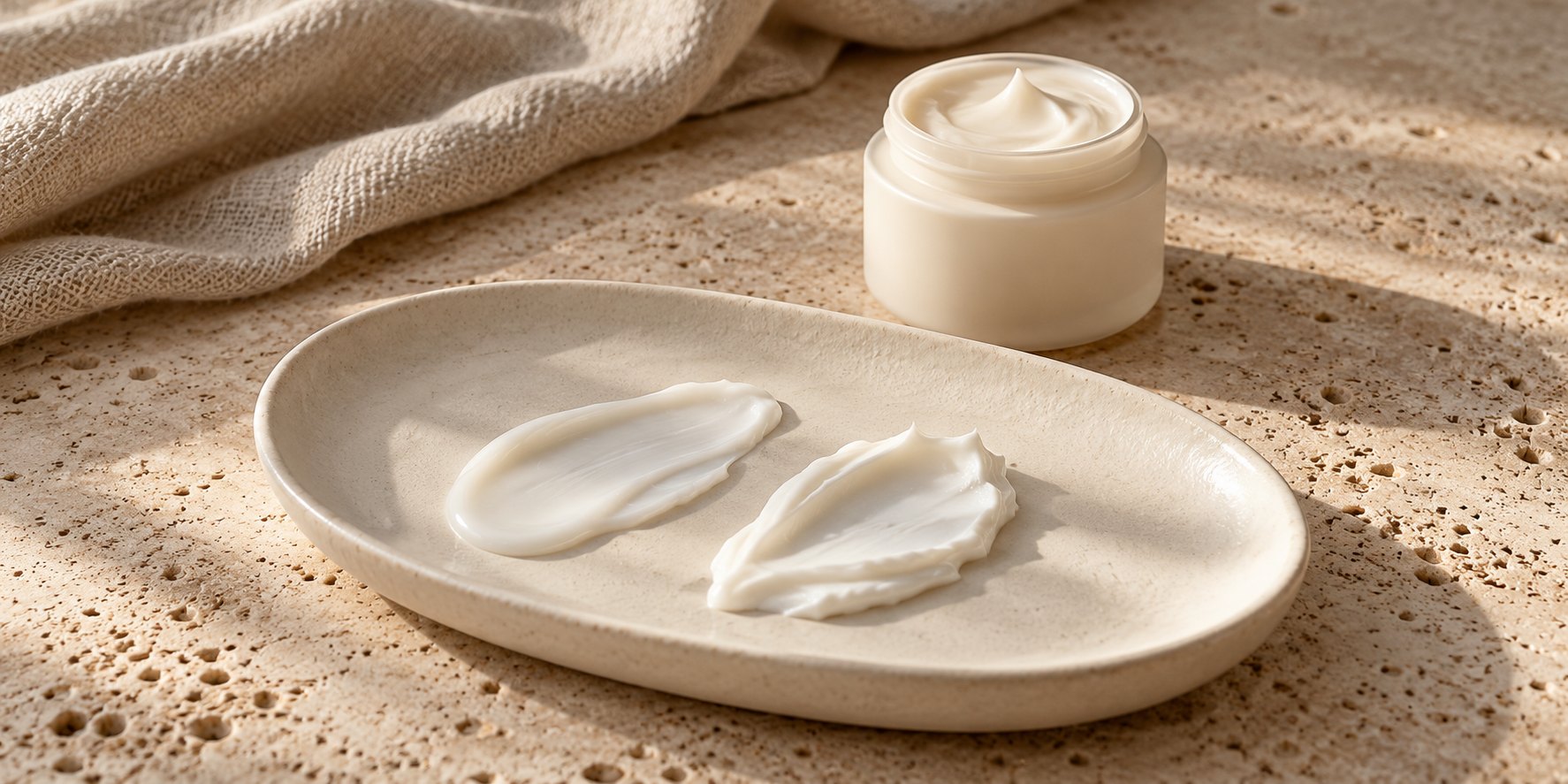
Combination skin usually describes a face with both oily and dry areas. A moisturizer decision becomes easier when you describe where you feel discomfort, what finish you prefer, and what you already use. You do not have to start by buying two different creams.
If you prefer a light finish, a facial gel or lotion is a practical starting candidate. If only your cheeks feel dry, consider where you apply moisturizer before replacing every product. The examples below help you choose a texture and placement; they are not treatment plans for acne, a rash or another condition.
Describe the areas before choosing a label
The American Academy of Dermatology’s combination-skin guidance suggests moisturizing dry areas and leaving oily areas. It also describes gels as generally lighter than lotions, and creams as richer. These are starting points for choosing a texture and placement, not a universal instruction for every forehead or nose.
Make a short note about what you notice in your usual routine. For example: “my cheeks feel uncomfortable after washing, but I dislike a heavy finish on my forehead.” This observation gives you a more specific shopping brief than “I need the strongest combination-skin moisturizer.” It does not identify the cause of discomfort.
Choose a workable starting texture
A practical starting candidate is one facial moisturizer whose directions, texture and cost fit your routine. If you already own a product you comfortably use, assess it before replacing it. “For combination skin” can narrow a shelf of options, but it cannot tell you how a particular product will feel on you.
Use our moisturizer texture comparison to understand the package terms. Then choose the question that matters to you: easier spreading, a finish that fits under your other products, or comfort on the areas where you want more moisture. Avoid treating a texture name as an effectiveness score.
| Example | A practical option to consider |
|---|---|
| You prefer a light finish across the areas you moisturize | Start with one facial gel or lotion. Assess its actual finish before assuming you need a richer companion. |
| Your cheeks feel dry while the center feels comfortable | Consider a cream on the dry areas. You do not need to extend it to the center just to make the application uniform. |
| A richer cream feels comfortable on your cheeks but too heavy on the forehead | Keep that texture where it suits you; if you want moisturizer elsewhere, consider a lighter facial gel or lotion for that specific job. |
These examples describe choices to consider, not tested product comparisons or prescribed amounts. Use each product within its directions. A dry patch that keeps bothering you is a reason to seek individual advice, rather than repeatedly applying more products.
Use an area-based plan without doubling the routine
The AAD’s general oily-skin guidance recommends moisturizing after cleansing and considering oil-free or noncomedogenic products. Its pages place different emphasis on application, so avoid turning general advice into an absolute rule for every area. Our oily-skin moisturizer guide explores that decision further.
If one product is comfortable wherever you use it, keep that simple arrangement. Consider a second texture only for an unmet need you can identify. Different areas do not automatically require different bottles.
Check the complete routine before blaming the cream
Write down your cleanser, leave-on products and moisturizer. If you recently changed several steps, it becomes difficult to tell which change you are responding to. Return to the question you are trying to answer instead of adding another product to compensate for an unexplained result.
Our beginner skincare routine shows where moisturizing fits alongside cleansing and sun protection. An ordinary non-SPF moisturizer does not supply sunscreen protection just because it is used in the morning.
For package claims, read what noncomedogenic means before interpreting the word as a promise of no breakouts. This article compares moisturizer selection, not acne treatments.
Give a new product a careful introduction
The AAD recommends a small-area trial twice daily for seven to ten days, following product directions. It is not medical patch testing or a guarantee of future tolerance. Stop if a reaction occurs; seek advice for severe or persistent symptoms.
Keep a brief record of the product, where you used it and what you noticed. You are looking for a routine you can comfortably maintain, not trying to make every facial area look identical. Repeated stinging, a rash or ongoing discomfort deserves individual advice rather than an ever-longer moisturizer shortlist.
Sources and editorial note
Sources were checked on October 31, 2026. The comparison questions and examples are an editorial decision aid, not a product test or an individual treatment plan.
This educational guide was prepared with AI assistance and checked against the linked sources. It has not been reviewed by a dermatologist. No products were tested for this article. It does not replace individual medical advice.
Read our Editorial Policy for how we handle sources, AI assistance, and corrections.
The conversation