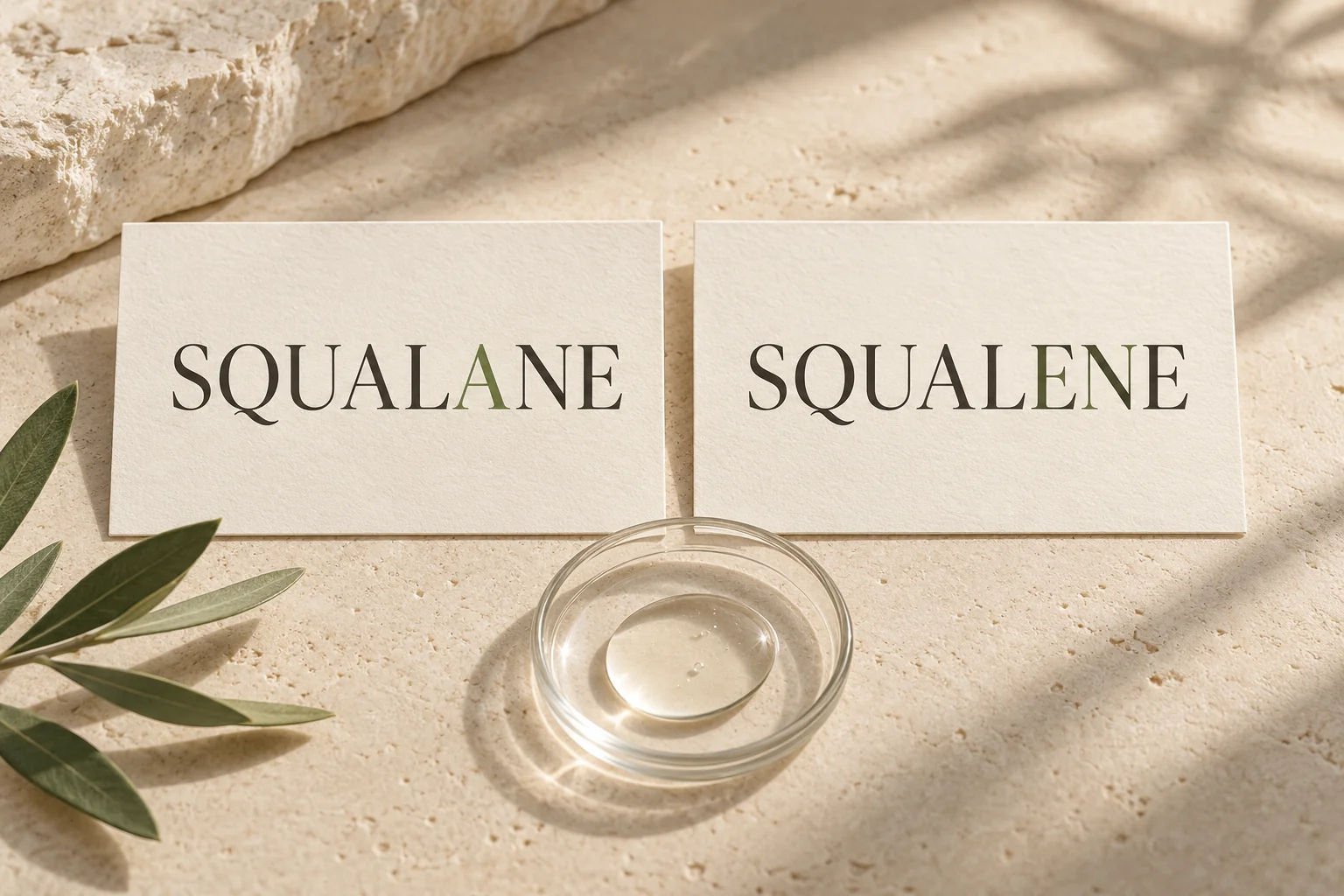
Squalane and squalene are related ingredients, not two spellings of the same word. Squalene occurs naturally in skin oil, plants, and animals. Squalane is its hydrogenated, more stable counterpart used in skincare. That one-letter difference identifies the ingredient; it does not, by itself, identify its source or rank a finished moisturizer.
This guide is for adults comparing cosmetic skincare labels. It focuses on ingredient identity, sourcing questions, and what a product label can establish—not supplements, disease treatment, or a promise of anti-aging results.
Start with the A and the E
Cleveland Clinic explains the distinction: hydrogenation converts squalene into the more stable squalane used in skincare. You do not need to memorize a chemical structure. When comparing a package with an online description, check which name each actually uses instead of silently treating them as interchangeable.
Squalane is used in moisturizing products. Recognizing the name can help explain part of a formula, but it does not tell you how that entire product will feel. For the broader vocabulary, our guide to moisturizing ingredient roles separates ingredients from the jobs they perform.
Stability is not an expiration-date calculator
“More stable” is a comparison between these ingredients, not a guarantee that a finished cosmetic lasts indefinitely. Keep the manufacturer’s storage instructions and any date or open-jar guidance with the product. Do not invent a longer usable life because you recognize squalane on its label.
Our skincare shelf-life guide covers package dates and storage as a separate reading task. Ingredient identity and product age answer different questions.
Ask about sourcing separately
A chemistry study of squalene hydrogenation describes plant and animal sourcing routes and demonstrates conversion of olive-derived squalene. This supports a practical distinction: the chemical name is not a plant-origin certificate. The same practical caution applies when shopping for squalane: if sourcing matters to you, look for a specific manufacturer explanation rather than inferring it from the ingredient spelling or a leaf on the package.
A useful question is: “What is the source of the squalane in this exact product?” Keep the reply beside the product name and version. A statement about one ingredient does not automatically describe every ingredient in the formula or every product sold by that brand.
Keep three questions on your comparison note
Use this short worksheet to organize information, not to score safety or diagnose what your skin needs:
- Identity: Does the current package say squalane or squalene? Copy the exact word and product name.
- Source: Does the maker explain where this ingredient comes from? Record what is stated and what remains unanswered.
- Fit: What does the finished product do in your routine, and do its directions, texture, and cost suit that purpose?
For example, suppose a cream and a facial oil both list squalane. The shared ingredient is a connection, not evidence that the two products are identical or that you need both. Compare their intended use before adding a step to your basic routine. This is a hypothetical comparison; no products were tested.
Read safety conclusions within their scope
The Cosmetic Ingredient Review’s 2019 re-review reaffirmed its conclusion that squalane and squalene are safe as cosmetic ingredients in the practices of use and concentrations assessed. This is an ingredient-safety assessment, not a head-to-head test showing which moisturizer works best for you.
Do not turn an ingredient review into a guarantee of individual tolerance or a claim that an entire product was clinically tested. If products repeatedly cause discomfort, seek individual professional advice rather than trying to solve the issue by changing one letter on a shopping list.
Sources and editorial note
Sources were checked on October 31, 2026. This educational guide was prepared with AI assistance and checked against the linked sources. It has not been reviewed by a dermatologist. No products were tested. The cover is an AI-generated conceptual illustration, not real packaging or a sourcing certification. Read our Editorial Policy for sources and disclosures.