Oily-feeling skin can still benefit from moisturizer, but the most comfortable choice may be a light gel rather than a rich cream. Start with how your skin feels after cleansing and how the finished product wears. A shiny forehead alone does not tell you which texture or amount will suit your whole face.
This guide helps adults make an everyday cosmetic-care decision. It does not diagnose dehydration, treat acne, or replace instructions for prescribed skincare.
Why advice about oily skin can sound different
The American Academy of Dermatology’s oily-skin guide recommends moisturizing after cleansing to keep skin hydrated. Cleveland Clinic also includes moisturizing in its everyday oily-skin advice. Neither recommendation requires choosing the thickest cream you can find.
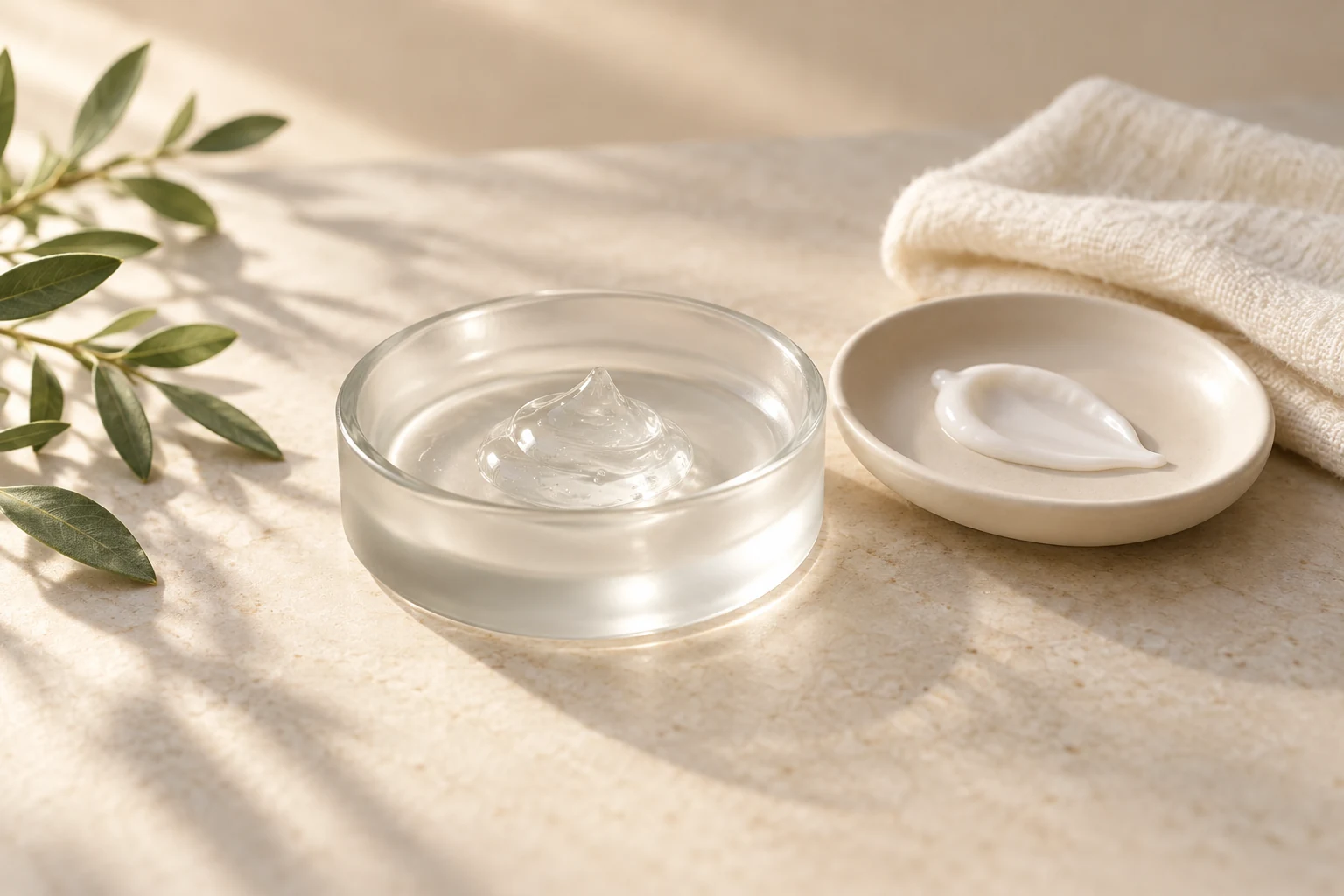
There is useful nuance: the AAD’s moisturizer-selection guide says some people with oily skin may consider skipping moisturizer or choosing a lighter gel. For combination skin, it discusses moisturizing dry areas while leaving oily areas alone. Its description of gels as often water-based and lighter than lotions offers a practical starting point.
If different parts of your face need different attention, read choosing a moisturizer for combination skin for a practical way to compare areas and textures without assuming you need two products.
Read those recommendations together: keep hydration in mind, while adjusting the product to the person and the area. They do not establish a universal rule that everyone needs a rich, separate layer everywhere, or that anyone with shine should stop moisturizing.
Compare comfort and finish separately
Before buying something new, describe the specific problem. “My cheeks feel tight after washing” and “I dislike the glossy finish of this cream” are different observations. Neither is a diagnosis, and neither tells you that an ingredient is missing.
| What you notice | A useful question |
|---|---|
| Your current moisturizer feels comfortable | Is there a reason to change it beyond a new trend? |
| The finish feels heavier than you prefer | Would a lighter texture fit your routine better? |
| Different areas feel different | Am I evaluating my cheeks and forehead separately? |
| Washing leaves skin uncomfortable | Should I review my cleansing step instead of only changing moisturizer? |
This worksheet is an organizational aid, not a skin-type test. Note the product, area, and sensation in plain language. If you compare alternatives, change one thing at a time so your notes remain interpretable. You do not need a collection of gels, lotions, and creams to do this.
Choose a manageable option
Look for a product intended for the area where you will use it, with directions you can follow and a texture you find practical. The AAD lists oil-free and noncomedogenic products as useful choices for oily skin. Our noncomedogenic label guide explains why that wording is a selection clue rather than an individual guarantee.
If a cream feels unnecessarily heavy, comparing a gel or lighter lotion is a reasonable next step. For broader format differences, see our moisturizer texture guide. Price, ease of use, and whether you already own a comfortable option belong in the decision too.
Avoid responding to shine with harder scrubbing
Both the AAD and Cleveland Clinic advise gentle cleansing rather than harsh scrubbing. If you want to manage surface oil during the day, both describe gently pressing blotting paper against skin instead of rubbing it. This addresses the visible oil; it is not a reason to keep washing your face whenever it looks shiny.
Our gentle face-washing checklist covers that step. Keep sun protection in your routine as well. If you choose a moisturizer with SPF, read and follow its sunscreen directions; our sunscreen label guide explains what to check.
Know when a product comparison is not enough
Persistent discomfort, a rash, or ongoing breakouts deserves individual advice rather than an endless search for a lighter formula. The AAD recommends consulting a dermatologist if oiliness or breakouts are a concern. Do not alter prescribed treatment based on this cosmetic-care guide.
For an otherwise manageable routine, finish with one decision: keep what works, compare one lighter alternative, or seek help for an unresolved problem. The aim is a comfortable routine, not a perfectly matte face at every moment.
Sources and editorial note
Sources were checked on October 31, 2026. This educational guide was prepared with AI assistance and checked against the linked sources. It has not been reviewed by a dermatologist. No products were tested. The cover is an AI-generated editorial still life, not a photograph of tested products. Read our Editorial Policy for sources and disclosures.