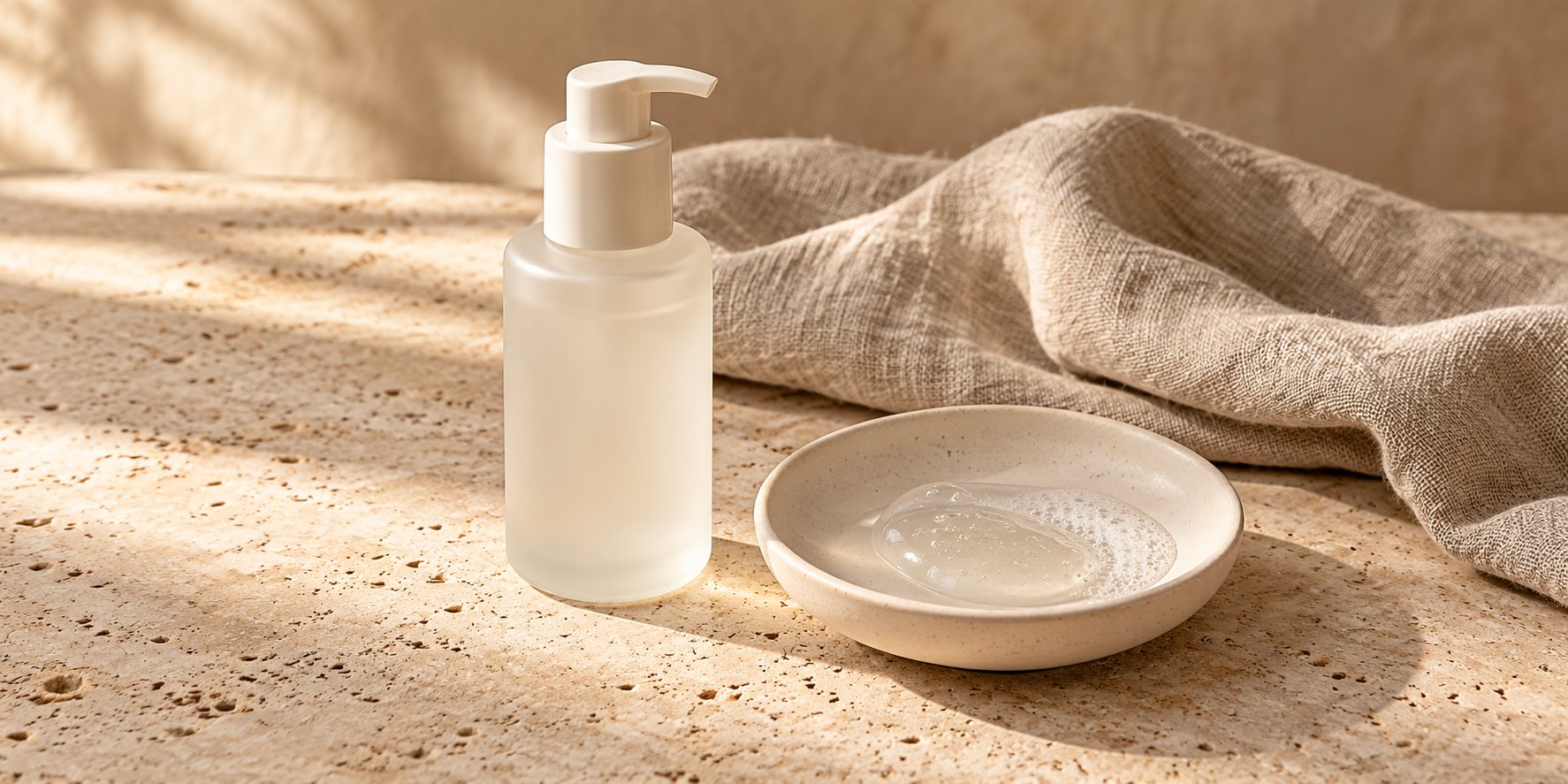
Gel, cream and foaming face washes describe different product formats, but the name on the bottle cannot tell you how gentle a cleanser will feel. Start with what you need it to remove, how the complete formula fits your routine, and whether you can use it comfortably as directed. You do not need to buy one of each.
This guide compares ordinary daily facial cleansers. An acne-treatment wash or a product prescribed for a skin condition needs its own directions and assessment. For the washing technique itself, see how to wash your face gently.
What gel, cream and foaming actually tell you
Gel and cream refer to product formats; foaming describes lather. DermNet lists gels and creams among cleanser formats and explains that surfactants influence lather, skin feel and rinsing. Compare these separate features in the actual products you are considering, rather than treating their names as a ranking from weak to strong.
| Format | Useful questions before buying |
|---|---|
| Gel cleanser | Does this gel lather? How much does the label say to use? Does its description match everyday cleansing or a separate treatment? |
| Cream cleanser | Is it intended to rinse off or wipe away? Is eye-area use allowed? Would the described finish fit your preferences? |
| Foaming cleanser | Is the foam dispensed by the pump or formed with water? Is the formula described as gentle? Can you follow its directions without scrubbing? |
These questions help you compare the actual products in front of you. None establishes that every cream is mild, every gel is drying, or a larger amount of foam removes more dirt. A photograph of rich lather is not a product test.
Choose for the job you need done
Write a short description of your usual evening: sunscreen only, light makeup, or makeup with products labeled water-resistant. Then check whether the cleanser’s directions address that use. Do not assume that a daily face wash is also an eye-makeup remover. If a separate removal step is needed, choose it for that specific task rather than automatically buying a second face wash.
For oily skin, the American Academy of Dermatology suggests a gentle foaming face wash and cautions against harsh washes intended to dry skin out. That supports considering a mild foaming option; it does not make foaming mandatory for every oily face.
If your routine already includes a treatment wash recommended by a clinician, check how a new cleanser would fit before adding it. The goal is a workable cleansing step in your basic skincare routine, with a clear reason for each bottle.
Read beyond the front-label promise
Before comparing price, check the intended body area, rinse instructions, warnings and complete ingredient list. Keep a record of any ingredient a clinician has told you to avoid. A highlighted ingredient or a claim such as “deep clean” leaves these practical questions unanswered.
If you are comparing fragrance claims, our fragrance-free versus unscented guide explains the distinction. A “noncomedogenic” label raises a different question; read what noncomedogenic means without treating it as a personal guarantee. Neither label replaces checking directions and the whole formula.
Give the cleanser a fair, gentle assessment
The AAD’s face-washing guidance recommends a gentle, non-abrasive cleanser, lukewarm water and fingertips, without scrubbing. Keep technique consistent when assessing a new wash. More rubbing makes it harder to judge the product itself.
Use a simple note rather than an elaborate score: product name, amount used according to its directions, what you were removing, and any discomfort. Avoid introducing several new products together; otherwise, it becomes difficult to identify which change mattered. Stop a product that causes a reaction and seek professional advice for persistent or severe symptoms.
You can compare two candidates on paper before purchasing either. Put intended use, directions, known exclusions, package size and price in adjacent columns. If one bottle answers your routine’s needs clearly, the extra choice may add little. Once you find a cleanser that works comfortably, a different texture name is not, by itself, a reason to replace it.
Sources and editorial note
Sources were checked on October 31, 2026. Format comparisons and the shopping worksheet are editorial decision aids, not findings from a comparison trial. No specific cleanser has been recommended or assessed for treatment of a skin condition.
This educational guide was prepared with AI assistance and checked against the linked sources. It has not been reviewed by a dermatologist. No products were tested for this article. It does not replace individual medical advice. Read our Editorial Policy for our approach to sources and corrections.
The conversation