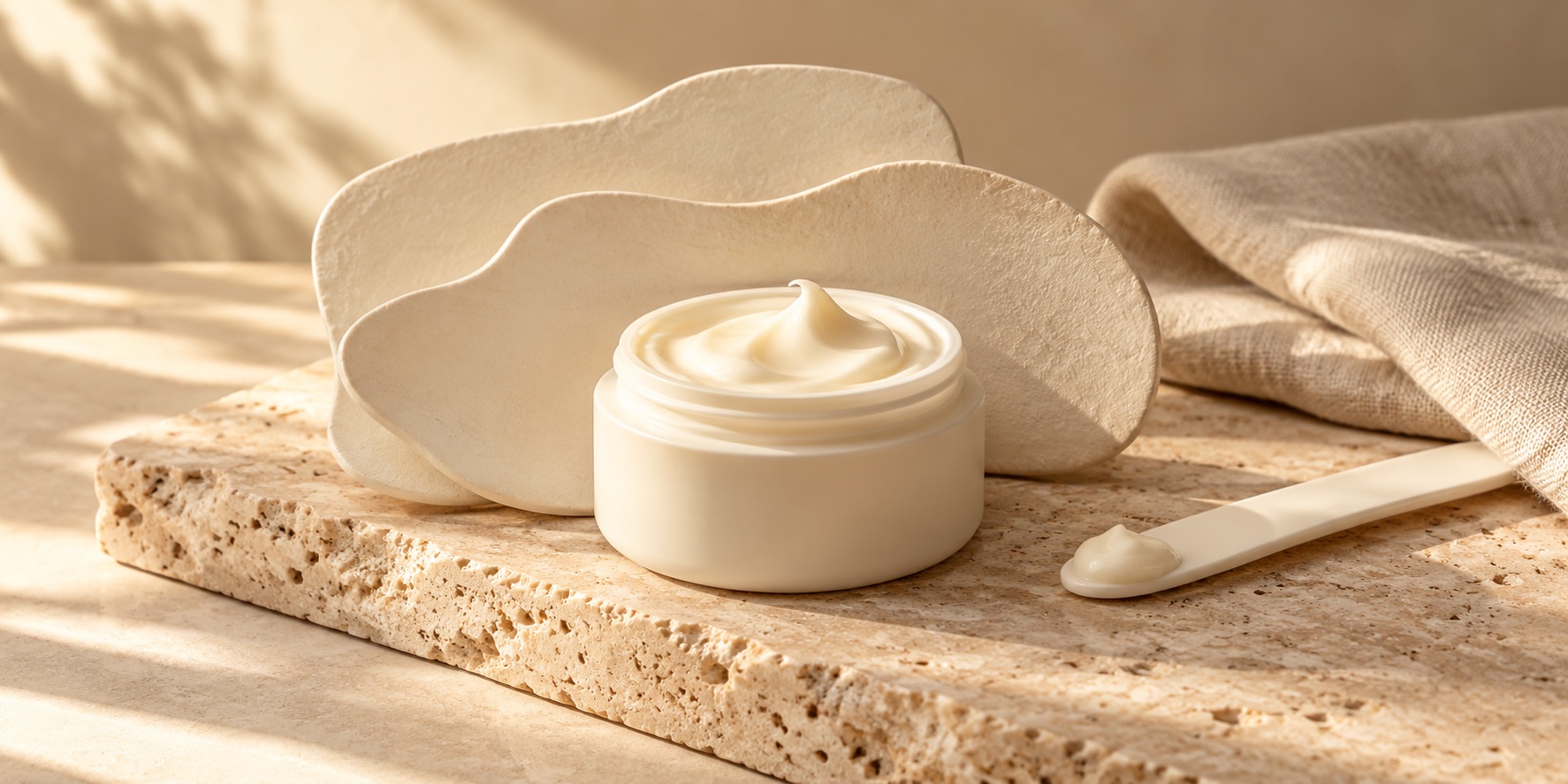
Ceramides are lipids—fat-like molecules—that occur naturally in the skin’s outer layer. They are part of the material between skin cells that helps the barrier limit water loss. In skincare, ceramides can be included in moisturizers, but the ingredient name alone does not tell you how well a particular formula works or whether you need to replace the moisturizer you already use.
This guide explains their role, how to read ceramide claims, and how to keep the decision proportionate to your everyday routine. It is about topical skincare, not oral ceramide supplements or treatment for a diagnosed skin condition.
Where ceramides fit in the skin barrier
The outermost skin layer, the stratum corneum, contains cells surrounded by an organized mixture of lipids. Ceramides are part of that mixture alongside cholesterol and free fatty acids. DermNet describes this lipid structure in its explanation of barrier function.
That relationship explains why ceramides appear in moisturizing products. It does not mean every episode of tightness proves a ceramide deficiency. DermNet’s dry-skin overview describes a range of contributors, including environmental conditions, washing practices, and underlying conditions. A symptom is not an ingredient test.
For the broader picture, read what the skin barrier does. Ceramides are one useful part of that explanation, rather than a complete description of how skin stays comfortable.
What research can—and cannot—tell you
Some ceramide-containing formulas have been studied in people. In the 2020 RESTORE Phase 1 study, a cream and lotion improved measured hydration and visible dryness after a single application to the lower legs of adults with dry, eczema-prone skin. The study reported effects lasting through 24 hours and disclosed funding from L’Oréal.
Those results concern the tested formulas and conditions. They do not isolate the effect of ceramides from the other ingredients, establish a benefit for every ceramide product, or show what will happen on everyone’s face. A single-application study also cannot answer every question about long-term use. We cite it as an example of formulation research, not as a product recommendation.
When a brand mentions research, ask three questions: Was the finished product studied? Who took part? What was actually measured? A study of an ingredient, a different formula, or a specific patient group is not automatically evidence for the result you are being promised.
Which ceramide names appear on ingredient lists?
Examples include Ceramide NP, Ceramide AP and Ceramide EOP. These names appear in the ingredient lists reported for the cream and lotion in Table 1 of the RESTORE study. They can help you recognize a ceramide-containing formula; they do not reveal its ceramide concentration or establish that a product with more named ceramides works better.
A moisturizer can combine ceramides with ingredients that attract water, soften skin or reduce water loss. Our humectants, emollients and occlusives guide explains these overlapping moisturizing roles.
Read the whole product, not just “ceramides”
The American Academy of Dermatology includes ceramides among ingredients to consider in a moisturizer. It also emphasizes choosing an appropriate texture. For a shopper, the useful question is whether the whole product suits its intended job.
| What you can check | What it helps you decide |
|---|---|
| Intended body area and directions | Whether the product fits how you plan to use it |
| Cream, lotion, or other format | Whether the texture seems practical for your routine |
| Full ingredient list | Whether it contains ingredients you already know you must avoid |
| Evidence behind a specific claim | Whether the claim concerns this formula or only an ingredient |
| Price and pack size | Whether you can comfortably keep using it |
On US cosmetic labels, ingredient order offers only limited information about amounts. Ingredients at one percent or less do not have to follow descending order, as the FDA’s labeling summary explains. You cannot calculate a product’s ceramide percentage or predict its performance from the list alone.
Our moisturizer texture guide can help with the format decision. If your current moisturizer is comfortable and meets your needs, a new ingredient headline is not, by itself, a reason to replace it.
Introduce a formula, not a promise
If you decide to try a ceramide moisturizer, change one product at a time so you can keep track of what you are using. Record the product name and any discomfort. It can fill the moisturizer step in your basic morning or evening routine; there is no need to add a matching serum simply because it shares the same highlighted ingredient.
The AAD recommends testing a new skincare product on a small area twice daily for seven to ten days, following its normal directions. This home check is different from medical patch testing and cannot guarantee that a later reaction will not occur. Stop using a product that causes a reaction and seek advice for a severe or persistent problem.
A moisturizer marketed around ceramides is not a substitute for prescribed treatment. Persistent dryness, a rash, or repeated stinging deserves individual assessment; the AAD advises seeing a dermatologist when dry-skin care does not help. Keep any clinician-directed treatment plan in place.
Sources and editorial note
Sources were checked on October 27, 2026. Labeling information applies to the United States. The cited study evaluates particular formulas; this guide does not establish that all ceramide moisturizers are equivalent or superior to alternatives. The ingredient-name examples were checked on October 31, 2026.
This educational guide was prepared with AI assistance and checked against the linked sources. It has not been reviewed by a dermatologist. No products were tested for this article. It does not replace individual medical advice.
Read our Editorial Policy for how we handle sources, AI assistance, and corrections.


The conversation