Your skin barrier helps limit water loss and protects you from things in the environment. Those two directions are the useful starting point: retaining water on the inside and limiting potentially harmful exposure from the outside. DermNet describes both functions.
“Water in, irritants out” is a memory aid, not a promise that skin is completely sealed. This guide explains the idea for adults who want to understand everyday skincare language. It is not a test for a damaged barrier or a plan for treating a skin condition.
Where is the skin barrier?
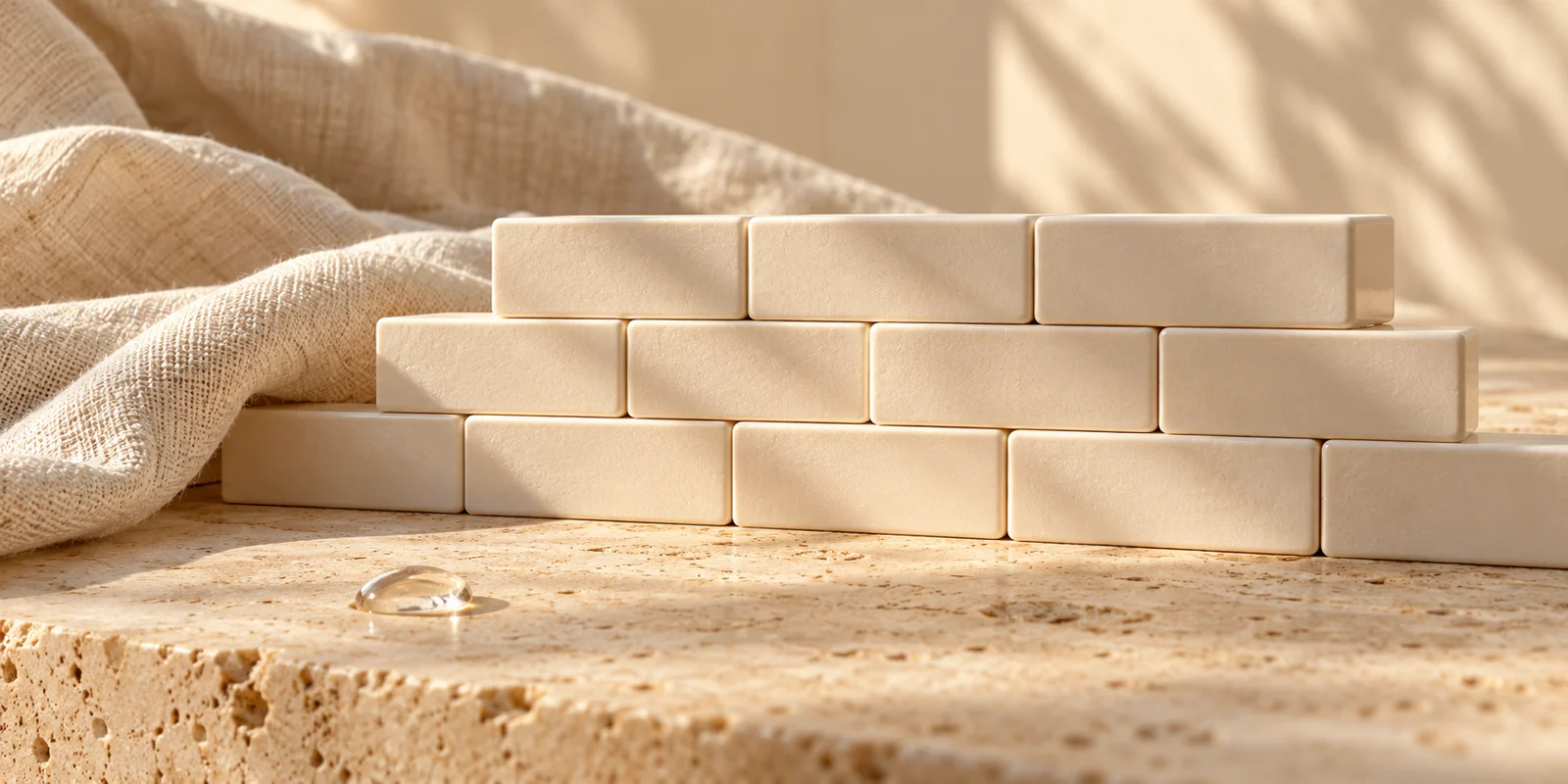
In everyday skincare discussions, the term usually focuses on the stratum corneum, the outermost part of the epidermis. A common model compares it to a wall: flattened cells called corneocytes form the bricks, with lipids between them acting as mortar. Lipids are fats; examples include ceramides, cholesterol, and fatty acids. Cleveland Clinic explains this structure.
That comparison helps explain why the surface is more than something to polish. Its cells and the material between them have a protective job. “Dead skin cells” can sound like unwanted debris, but these outer cells are part of a useful structure.
The wall picture has limits. Skin is not a solid plastic wrapper. The UK’s Health and Safety Executive describes the barrier as semi-permeable: some water can pass through it. Think controlled movement rather than a perfect seal.
Two directions to keep separate
Use this small concept map when you encounter the word “barrier.” It explains functions, not symptoms.
| Direction | What the barrier helps do | A useful interpretation |
|---|---|---|
| Inside to outside | Regulate water loss through the skin | Holding on to water matters, not just putting water on the surface. |
| Outside to inside | Limit entry of potentially harmful substances and microbes | Protection involves what contacts skin as well as what is applied for care. |
These directions come from DermNet’s explanation of barrier function. You may also see transepidermal water loss, shortened to TEWL. The term describes water moving outward through the epidermis. It is a technical description, not a diagnosis you can make from a mirror.
Does removing more surface skin help?
Not automatically. Exfoliation removes cells from the outer surface, and the American Academy of Dermatology says it is not suitable for everyone. Excessive or unsuitable exfoliation can irritate or damage skin.
Understanding the barrier gives you a reason to question the idea that a more thoroughly stripped surface is always a better one. The aim of this article is not to select an exfoliant or prescribe a schedule. If you are deciding whether to exfoliate, that is a separate question from learning what the barrier does. For a practical review of the cleansing step, our gentle face-washing checklist covers technique and frequency.
A decision aid for barrier claims
When an article or package mentions the skin barrier, ask which question it is actually answering:
- Structure: Is it explaining the skin’s own cells and lipids?
- Product purpose: Is it explaining what a particular finished formula is intended to do?
- Personal assessment: Is it claiming to tell me what is happening to my skin?
Do not let an explanation of structure stand in for the other two answers. Learning that ceramides occur naturally in skin does not, by itself, tell you which product to choose. Likewise, this general explanation cannot assess your skin or establish why it feels different.
For a product-choice question, our moisturizer texture guide covers a different decision. There is no shopping list attached to understanding your barrier. If you are starting from scratch, our beginner skincare routine puts cleansing, moisturizing, and sun protection in a simple daily sequence.
Keep sun protection a separate question
Barrier care does not replace sun protection. The AAD recommends broad-spectrum, water-resistant sunscreen with SPF 30 or higher. If you want to understand those label terms, see our sunscreen label guide.
The takeaway is a clearer mental model: the outer surface has useful work to do. Understanding that work can help you read skincare explanations without turning every new term into another routine step.
Sources and editorial note
Sources were checked on October 26, 2026. This general educational article was prepared with AI assistance and checked against the linked sources; it has not been reviewed by a dermatologist. No products were tested for this article. For an ongoing skin concern, seek individual advice from a qualified healthcare professional.
Read our Editorial Policy for how we handle sources, AI assistance, and corrections.
The conversation