SPF 30 sunscreen plus SPF 15 foundation does not establish SPF 45 protection. When sunscreen and makeup share an SPF claim, their numbers are not an equation. The more useful questions are how much you apply, where you apply it, and how you will reapply sunscreen later.
This guide is for adults using sunscreen and makeup sold in the United States. It addresses layering and practical planning—not brand comparisons or a method for measuring your protection at home.
Separate the label numbers from the layers
In an original interview with the Prevent Cancer Foundation, dermatologist Patricia Lucey explains that SPF values are not additive. Layering may help with overall thickness and coverage, but it does not turn two package numbers into a new combined SPF.
That distinction cuts both ways: do not add the numbers, but do not conclude that another layer can never contribute anything. You cannot calculate the protection achieved on your face simply by adding—or choosing the largest of—the labels in your routine. The example above illustrates the arithmetic mistake; it is not a tested product combination.
Why the amount of makeup matters
Johns Hopkins Medicine explains that reaching makeup’s labeled SPF would require much more makeup than people typically apply. A sheer layer chosen for its appearance should not be assumed to deliver the protection printed on the package.
This does not mean an SPF claim on makeup is meaningless. The FDA classifies products intended as both makeup and sun protection as both cosmetics and drugs. The practical problem is relying on a cosmetic application habit to fulfill sunscreen directions.
Keep two decisions separate: how much makeup gives the finish you want, and how you will apply sunscreen as directed. A foundation that looks even in a mirror is not a home test of UV protection. Nor does a higher number on a lightly applied cosmetic solve an uncertain application amount.
Build the morning around sunscreen directions
The American Academy of Dermatology’s product-order guide places moisturizer and/or sunscreen before makeup. Use that as a straightforward sequence: complete your sunscreen application, then apply makeup if desired.
Do not use the foundation’s SPF as a reason to shorten that sunscreen step. Follow the specific sunscreen’s directions, including application before sun exposure. For broad-spectrum, SPF, and water-resistance checks, use our sunscreen label guide. For the rest of the routine, see our basic skincare guide.
Plan the next application before leaving home
Makeup does not cancel the need to reapply sunscreen. The Prevent Cancer Foundation advises reapplication every two hours during extended time outdoors; Johns Hopkins also emphasizes reapplication, especially after swimming or sweating. Follow the product’s directions when an activity calls for an earlier application.
A makeup touch-up and a sunscreen application are not automatically the same task. Do not assume a light dusting of SPF powder or a quick mist restores the labeled protection. The amount and method still have to meet the product’s sunscreen instructions.
A practical editorial approach is to choose a makeup routine that leaves room for proper sunscreen reapplication—even if that means refreshing the makeup afterward. This is a planning suggestion, not a tested technique for preserving foundation. Keep shade and protective clothing in the plan as well, as Johns Hopkins recommends.
Use a three-question check, not an SPF total
Application: Which product am I relying on for sunscreen, and can I follow its directions rather than applying only a cosmetic touch?
Coverage: Am I planning for exposed skin beyond the areas where I wear foundation? A makeup map is not necessarily a sun-protection map.
Follow-through: What will I use when sunscreen needs reapplying, and will my plans allow me to apply it properly?
These questions organize the routine without assigning a score. You do not need to buy makeup with SPF just to collect another number, or discard makeup you like because its number cannot be added to your sunscreen’s.
Sources and editorial note
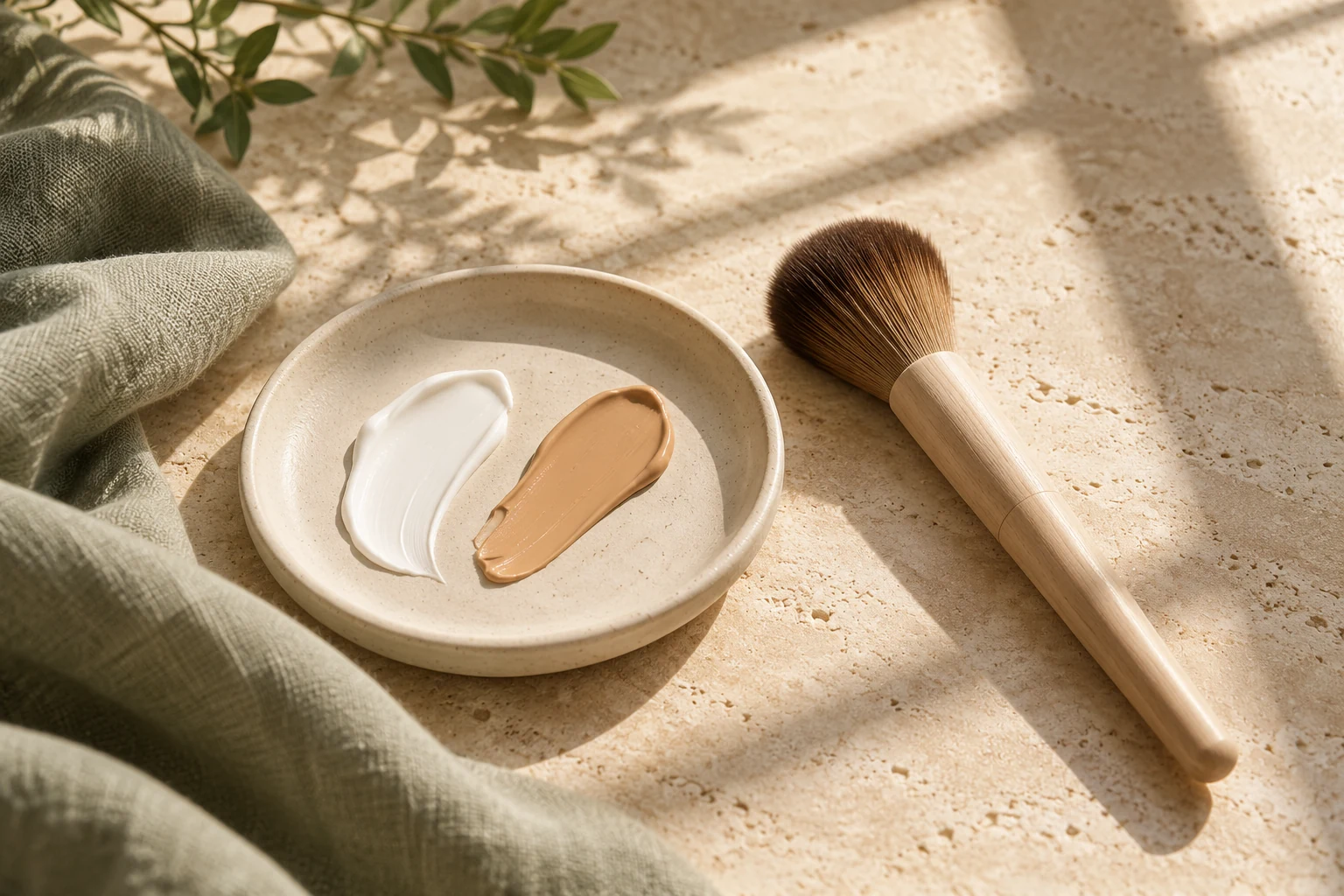
Sources were checked on November 1, 2026. The arithmetic example and planning checklist are editorial aids, not product-test results. This educational article was prepared with AI assistance and checked against the linked sources. It has not been reviewed by a dermatologist. No products were tested. The cover is an AI-generated conceptual still life; its swatches do not show an application dose. Read our Editorial Policy for sources and disclosures.