For a day outdoors in snow, prepare sun protection before leaving and make room for reapplication while you are out. Clothing, UV-protective eyewear, and sunscreen work together. Cold air and a thick coat do not tell you how much ultraviolet radiation reaches the skin that remains exposed.
This guide is for adults planning time in snowy conditions, from a neighborhood walk to a mountain outing. Conditions vary across the United States; a winter date alone does not describe your destination. This is a sun-protection plan, not a guide to treating sunburn or managing a medical condition.
Snow changes the directions UV can come from
The US Environmental Protection Agency explains that UV cannot be felt as warmth and that snow reflects the sun’s rays. Shade helps, but trees and canopies do not provide complete protection. A cold, shaded spot can still involve UV exposure.
Higher elevations can add to the concern. The American Academy of Dermatology’s cold-weather guidance specifically highlights altitude and reflected UV during winter activities. That does not mean every snowy walk has the same exposure as a day at a high mountain resort.
A 2010 field study at Western North American ski areas, using measurements collected in 2001–2003, recorded direct, diffuse, and snow-reflected UV. It also found that people’s protection choices did not consistently track UV conditions. This older observational research helps explain the setting; it is not today’s forecast, a product test, or a calculation of your personal dose.
Check the forecast for the place and hours of your outing. Our UV Index guide explains hourly readings and daily peaks. Keep snow, elevation, and how long you will be outside in view rather than relying on the temperature alone.
Prepare while your hands are still free
AAD recommends broad-spectrum, water-resistant sunscreen with SPF 30 or higher on skin not covered by clothing. Apply it before the outing, following the label; AAD and FDA guidance use a 15-minute lead time. Give yourself time to cover exposed areas carefully before putting on gloves.
Check the nose, ears, hairline, neck, and hands rather than assuming winter clothing covers them all. Use an SPF lip product as directed. For eyewear, look for stated UV protection instead of judging lens darkness. EPA recommends sunglasses that block 99–100% of UVA and UVB. Keep appropriate sport-safety equipment in place; this checklist does not replace activity-specific gear guidance.
Our clothing and UPF guide explains coverage and garment labels. Put sunscreen where you can retrieve it at a planned stop, rather than in a bag you will leave behind.
Make reapplication part of the outing
Follow the sunscreen’s reapplication directions. FDA advises reapplying at least every two hours and more often when sweating or swimming. A cold day can still include sweaty exercise. The water-resistance interval and other directions on your particular product matter; do not wait for a convenient lunch break if its instructions call for earlier reapplication. Our sunscreen label guide explains those separate checks.
Use these four transition points to make the plan workable. They are an organizational aid, not a personalized exposure schedule.
- Before leaving: check the destination forecast, apply as directed, and pack the products you will need.
- At the start: notice what your actual outfit leaves uncovered and decide where you can stop to reapply.
- During a break: check the reapplication plan and any earlier label instructions. Removing gloves, a hat, or a neck covering may expose areas that were covered when you set out.
- Before going back outside: review the time, coverage, and product directions again. A morning application does not automatically cover the afternoon.
Protect the sunscreen from temperature extremes
Preparation includes the container, too. In its winter sun-protection advice, AAD cautions against exposing sunscreen to extreme cold or heat. Follow the labeled storage conditions and avoid leaving it where it could freeze or overheat.
If you are unsure whether a stored product is still suitable, ask its manufacturer about the actual conditions it experienced. This guide cannot supply a universal freezing threshold or certify a thawed formula by its appearance. Check the expiration date before packing, rather than discovering a problem at the trailhead.
Sources and editorial note
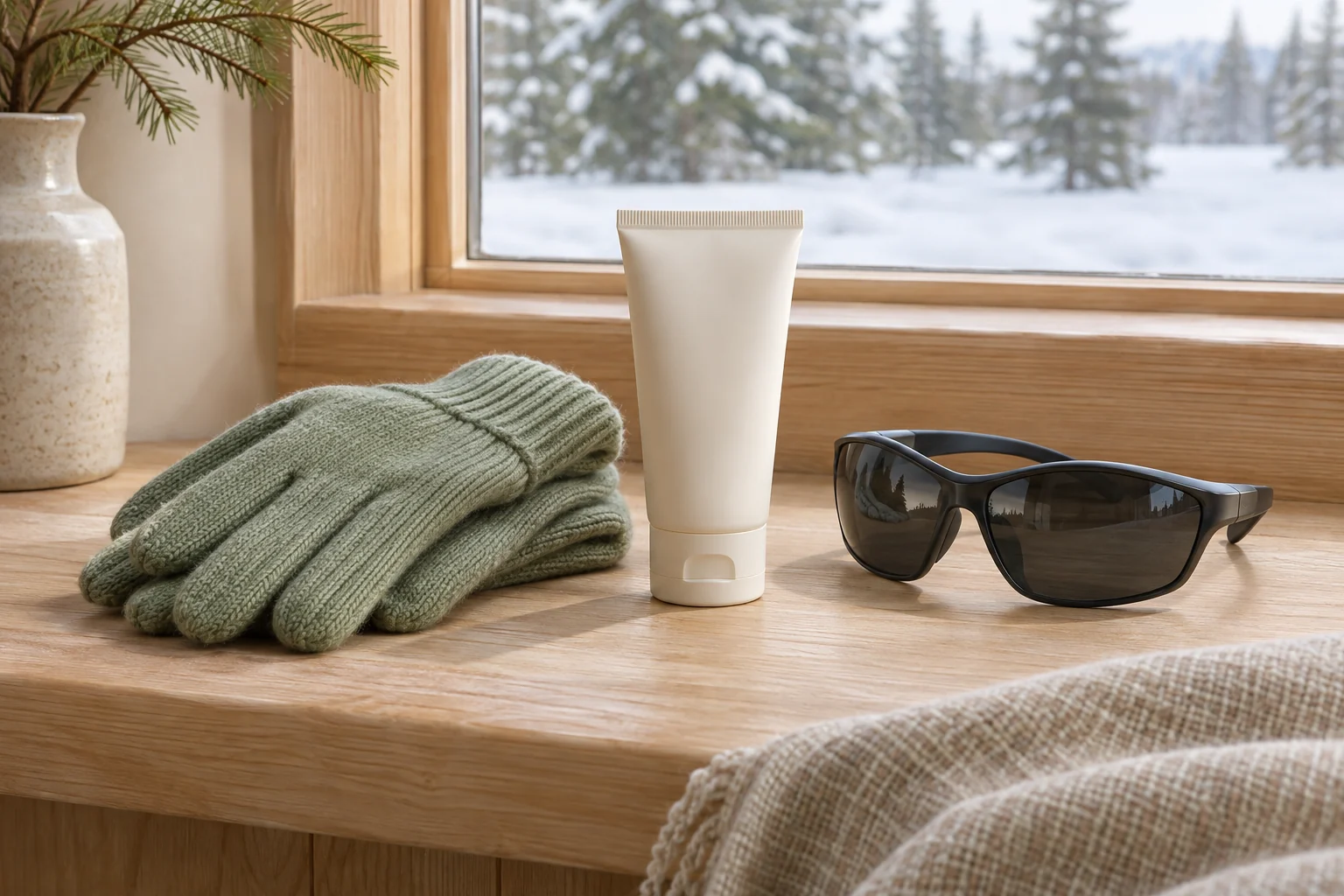
Sources were checked on November 7, 2026. This US-focused educational article was prepared with AI assistance and checked against the linked sources. It has not been reviewed by a dermatologist. No sunscreen, clothing, or eyewear was tested. The AI-generated cover is a conceptual preparation scene, not a product endorsement, storage instruction, or proof of UV protection. Read our Editorial Policy for sources and disclosures.