
The UV Index helps you plan around the strength of the sun’s ultraviolet radiation. Check the forecast for your location and the time you will be outside, then use it to plan timing, shade, clothing, and sunscreen. It is not a personal countdown to sunburn.
This guide is for adults planning everyday outdoor activities in the United States. It explains how to read the forecast, rather than how to choose a sunscreen or diagnose sun damage.
First, check what the number describes
The US Environmental Protection Agency explains that the National Weather Service calculates UV forecasts using factors including ozone, clouds, and elevation. The scale starts at zero and extends beyond 11; larger numbers indicate stronger UV exposure potential.
A daily maximum and a value for one hour are different pieces of information. WHO notes that UV levels change through the day and that the reported daily value represents the maximum. That peak occurs around solar noon, which is not necessarily 12:00 on the clock.
Before comparing numbers in two apps, check the location, date, and label beside each reading. One may show the daily peak while another shows the current hour. For a later outing, look at the forecast for that outing rather than relying only on the number displayed now.
Read the category, then make a plan
The National Weather Service’s scale uses these categories:
| UV Index | Category |
|---|---|
| 0–2 | Low |
| 3–5 | Moderate |
| 6–7 | High |
| 8–10 | Very high |
| 11+ | Extreme |
At 3 or above, WHO recommends protective measures. At 8 or above, its advice includes avoiding outdoor exposure around midday. If your schedule is flexible, consider moving an outdoor activity away from that peak instead of treating sunscreen as permission to keep the same plan.
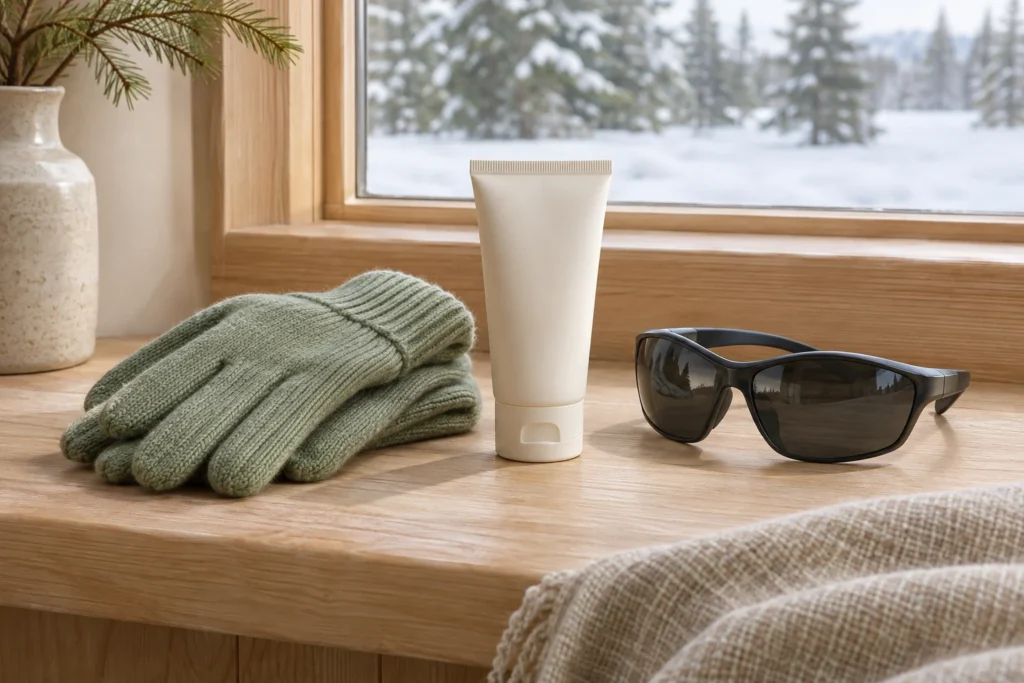
Low does not mean every situation is identical. The National Weather Service still advises sunglasses on bright days and additional protection for people who burn easily. It also highlights reflection from snow. A broad forecast category cannot account for every person and setting.
Do not use temperature as your UV forecast
A comfortable breeze or cloudy sky can make an outing feel gentler without telling you its UV level. WHO explains that thin clouds may let substantial UV through, and some cloud conditions can enhance it through scattering. Snow and other reflective surfaces can add to exposure.
Check the destination when traveling, too. The forecast for home is not a substitute for the place where you will walk, hike, or spend the afternoon. There is no single winter or summer UV value that applies across the United States.
Turn the forecast into a short outing note
Use these four prompts as an organizational aid, not a risk calculator:
- Where and when? Record the destination, date, and planned outdoor hours.
- Which reading? Identify whether you checked an hourly value or daily maximum.
- What can change? Choose an alternative time or a shaded location if the forecast calls for stronger precautions.
- What will I bring? Check your clothing, hat, sunglasses, and sunscreen before leaving.
Our clothing and shade guide helps with coverage. For sunscreen selection, the American Academy of Dermatology recommends broad-spectrum, water-resistant SPF 30 or higher. Follow the product’s application and reapplication directions; our sunscreen label guide explains those checks.
The useful outcome is a workable plan for that outing. You do not need to buy another product just because you started checking the UV Index.
Sources and editorial note
Sources were checked on October 29, 2026. This educational guide was prepared with AI assistance and checked against the linked sources. It has not been reviewed by a dermatologist. No products or weather apps were tested. The cover is an AI-generated editorial illustration. Read our Editorial Policy for sources and disclosures.

The conversation